
Peruvian flavors
Older than the Inca
The Inca empire ran for about a century. By the time it arrived, the potato had been farmed in these mountains for thousands of years...
What was already here
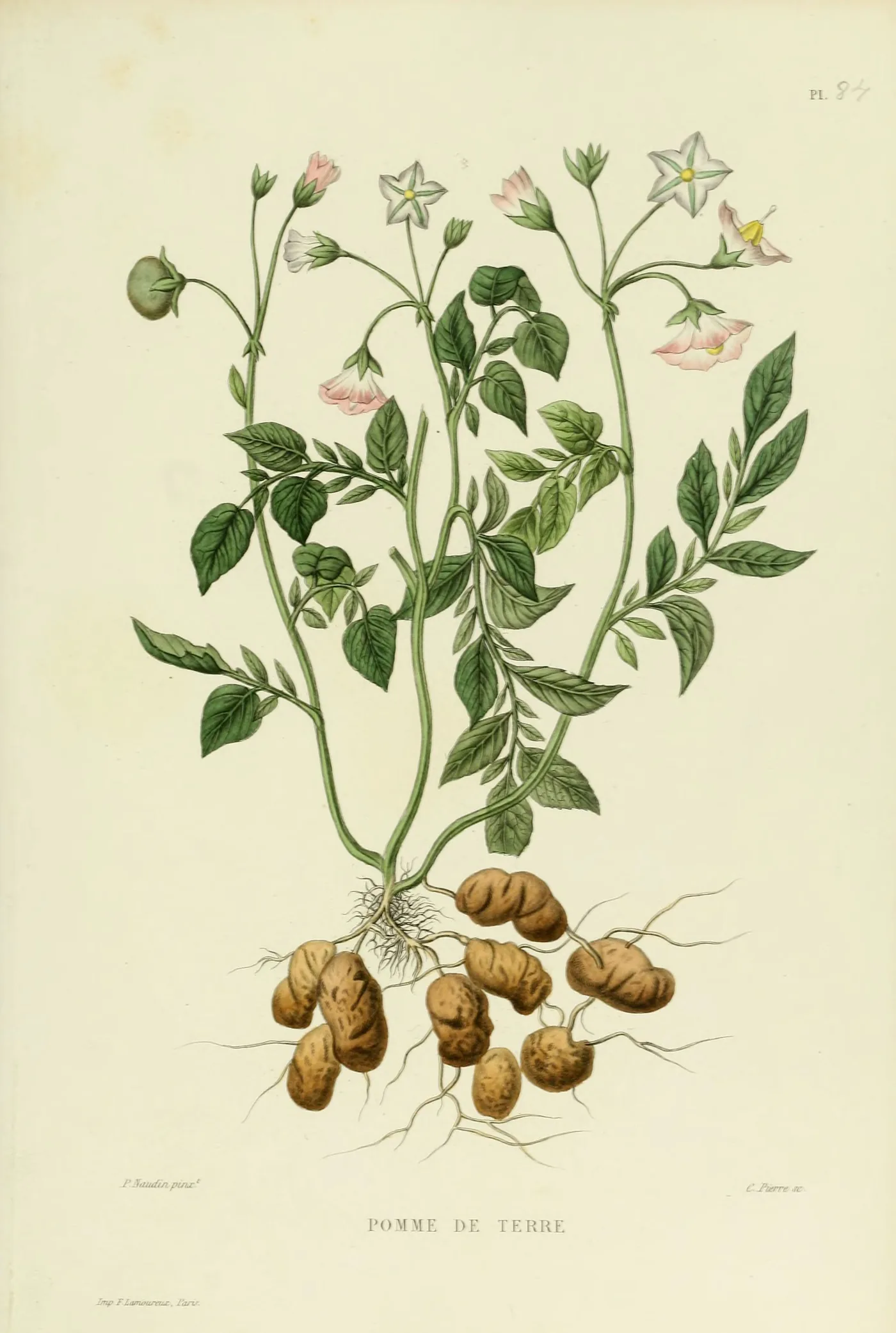
Pomme de terre
Papa
Solanum tuberosum
Domesticated on the high plateau around Lake Titicaca roughly eight thousand years ago. Andean farmers also solved how to keep it: left out to freeze at night and dry in the sun, a potato becomes chuño and stores for years. Around four thousand varieties still grow in Peru, in colours no supermarket stocks.
On the menu asPapa a la Huancaína
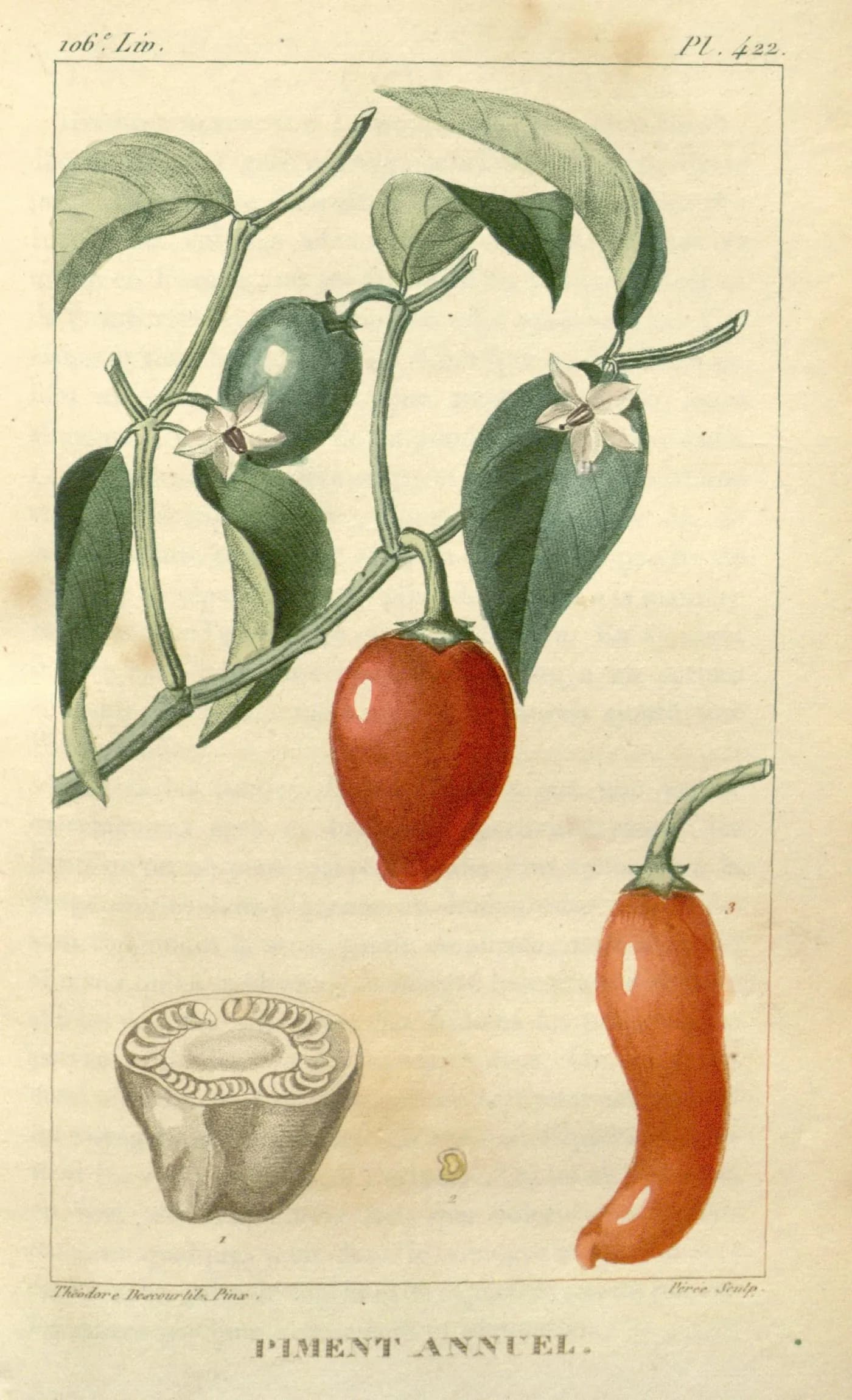
Piment annuel
Ají
Capsicum annuum
Peru says ají, Mexico says chile. Both words came from indigenous languages, and the Spanish picked up ají in the Caribbean long before they reached Lima. Ají amarillo is fruity and slow, ají rocoto sharper and quicker.
On the menu asCeviche de Lubina
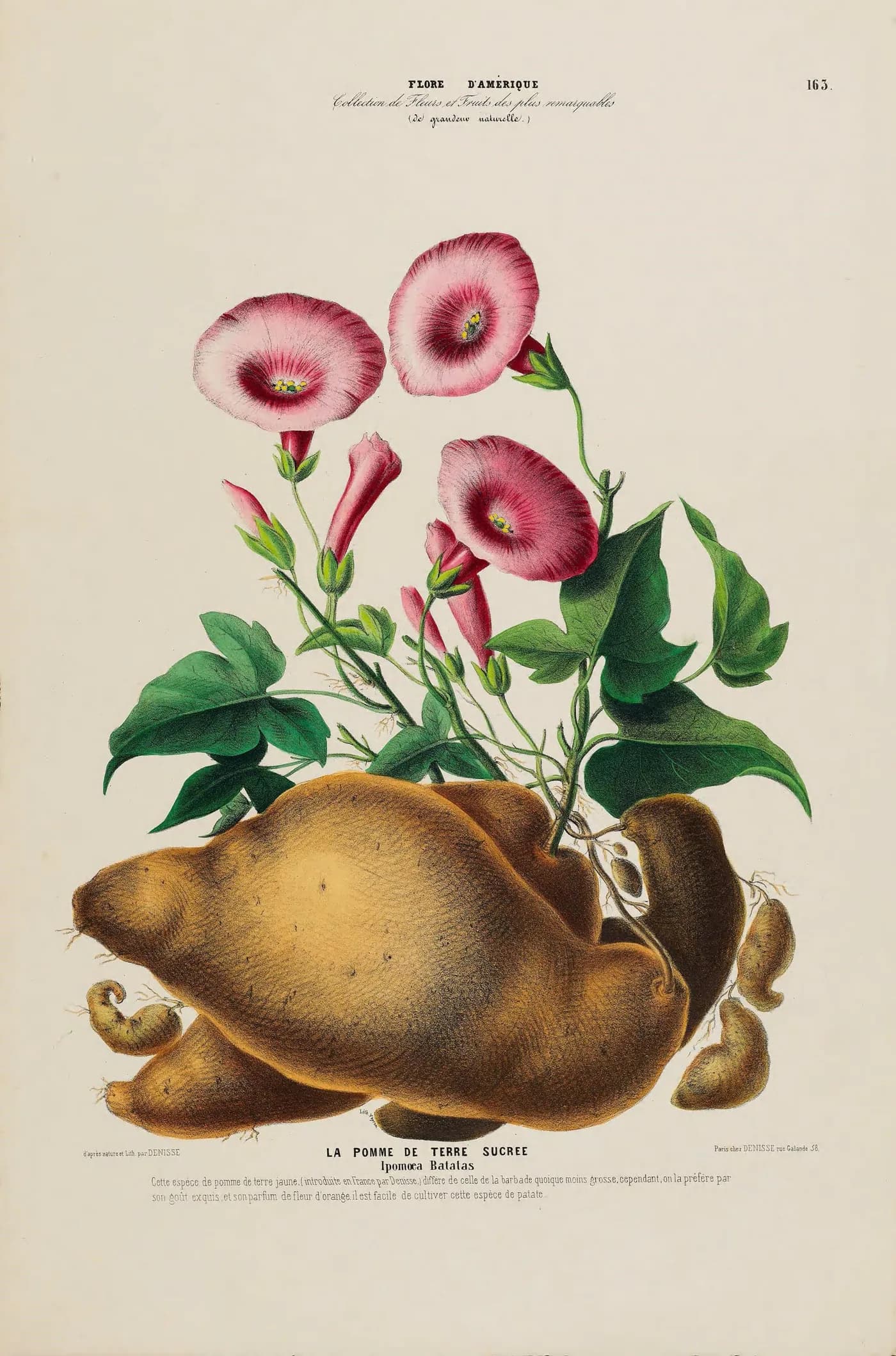
La pomme de terre sucrée
Camote
Ipomoea batatas
Grown on this coast for thousands of years. It also reached Polynesia well before any European did, and the word used across the islands, kumara, is close enough to the Quechua that the Pacific crossing is still argued about. On the plate the job is simpler: something soft and creamy to land on, sweet against the lime.
On the menu asCeviche Mixto
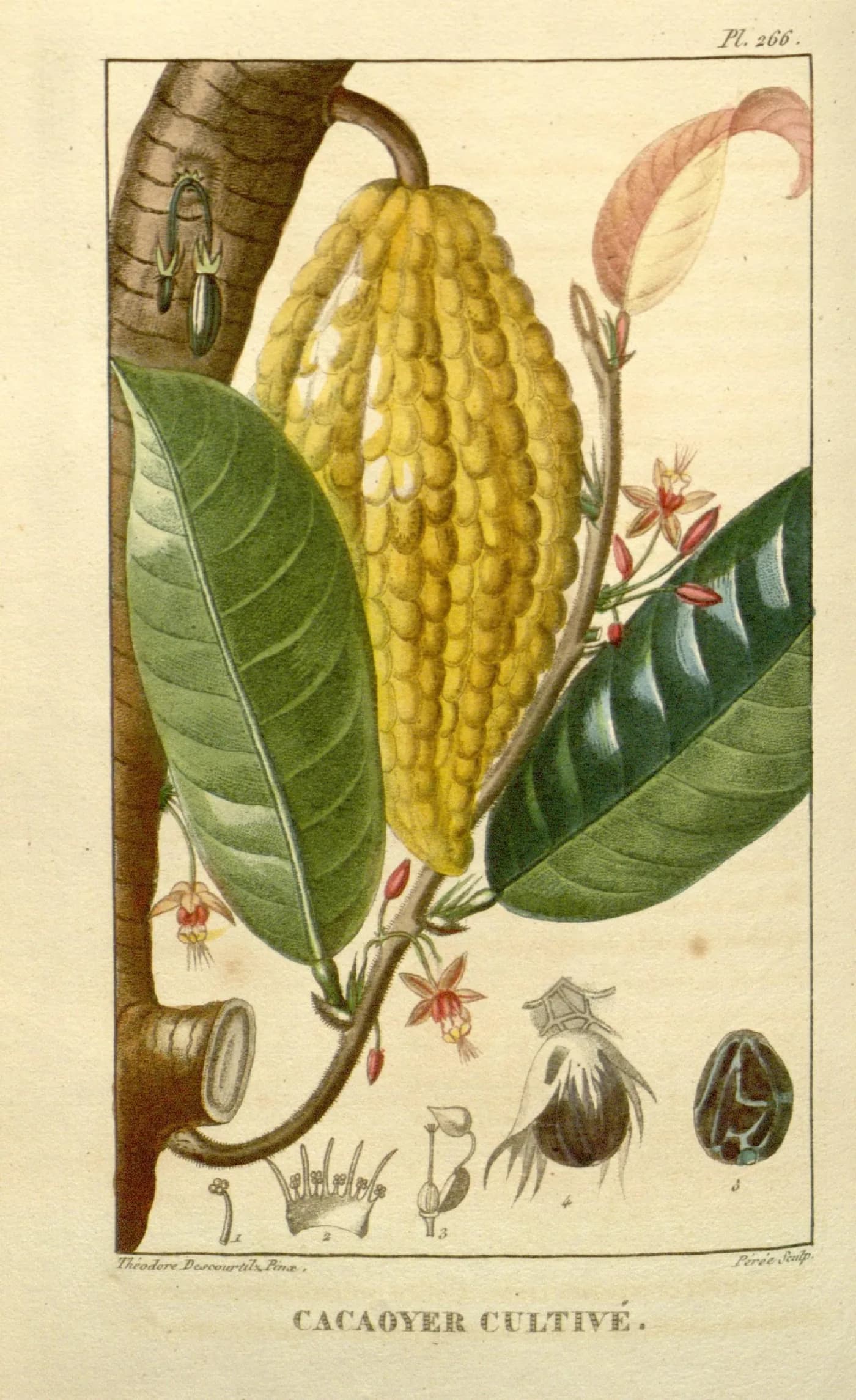
Cacaoyer cultivé
Cacao
Theobroma cacao
The oldest known traces of people using cacao come from the upper Amazon, on the Peru and Ecuador border, about five thousand three hundred years ago. It travelled north to Mexico later, which is where the story usually gets told from. Theobroma, the botanical name, means food of the gods.
Then ships came, in both directions. Some of what Peru sent out fed the rest of the world. Some of what arrived never left.
What arrived
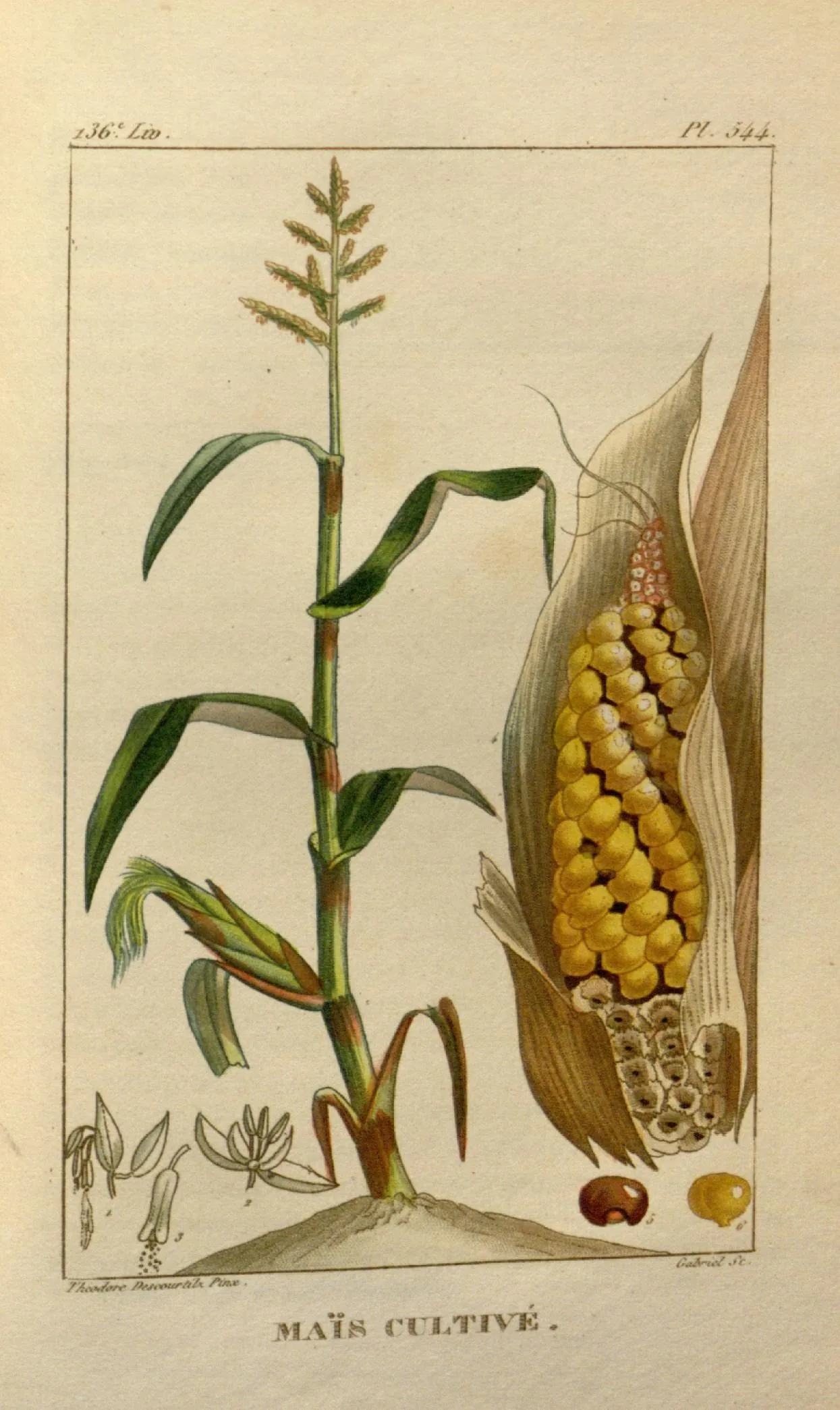
Maïs cultivé
Choclo
Zea mays
Maize was domesticated in Mexico, not Peru, and came south early. The Andes made it theirs: kernels the size of a thumbnail, purple varieties boiled down for chicha morada. Under the Incas maize beer was poured at state feasts as an obligation, which is one way to hold an empire together.
On the menu asCeviche de Lubina
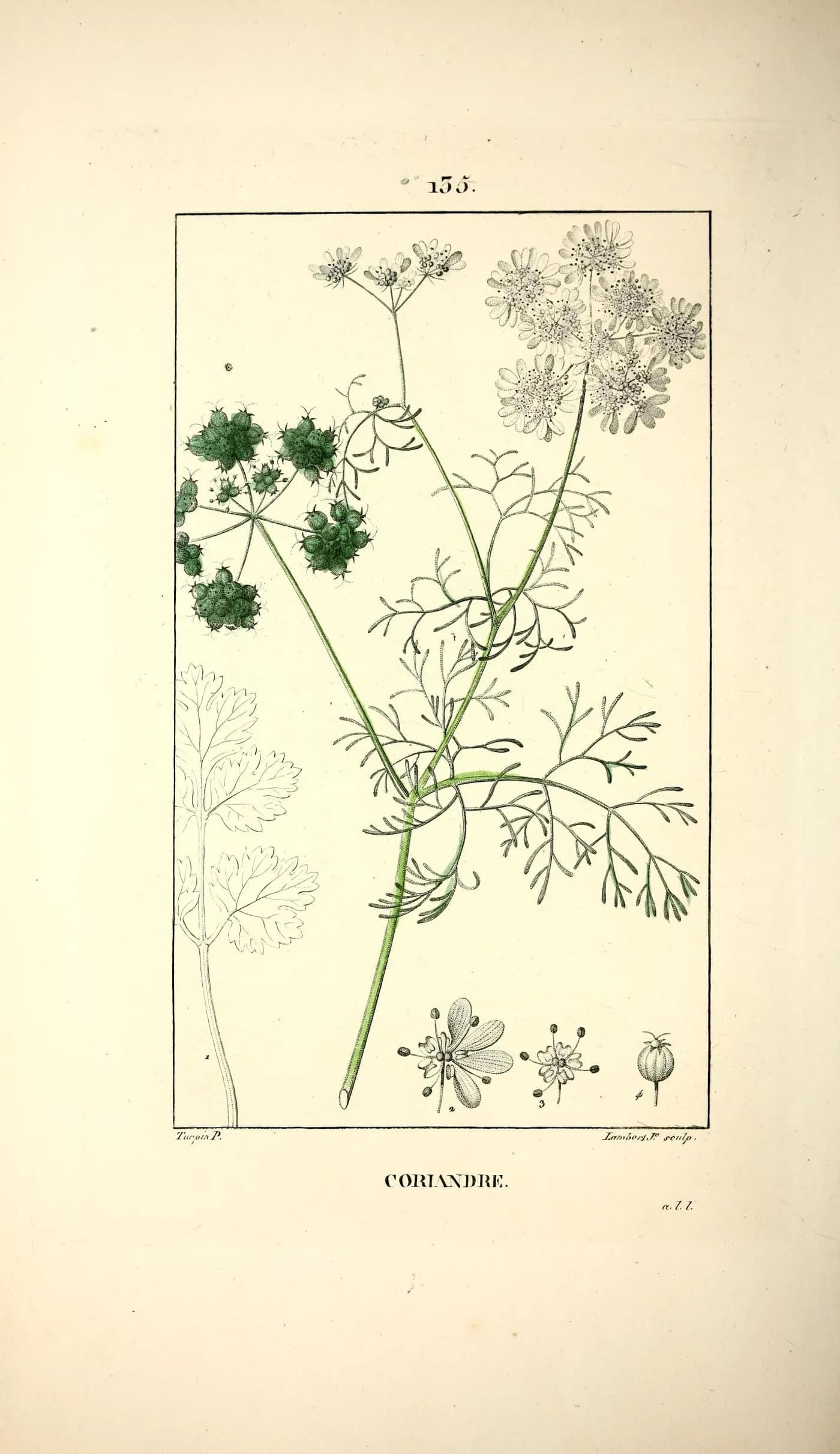
Coriandre
Culantro
Coriandrum sativum
Coriander is Mediterranean. It has been found in Egyptian tombs, and it reached Peru with the Spanish in the sixteenth century. It is in every ceviche we make now. Four hundred years is long enough to stop being a guest.
On the menu asTiradito de Lubina
Plates
- Pomme de terre (Solanum tuberosum) — Nouvelle iconographie fourragère, Pl. 84, 1871. Wikimedia Commons, public domain.
- Piment annuel (Capsicum annuum) — Descourtilz, Flore médicale des Antilles, 1828. Wikimedia Commons, public domain.
- La pomme de terre sucrée (Ipomoea batatas) — Denisse, Flore d'Amérique, 1843. Wikimedia Commons, public domain.
- Cacaoyer cultivé (Theobroma cacao) — Descourtilz, Flore médicale des Antilles, 1827. Wikimedia Commons, public domain.
- Maïs cultivé (Zea mays) — Descourtilz, Flore médicale des Antilles, 1829. Wikimedia Commons, public domain.
- Coriandre (Coriandrum sativum) — Flore médicale, 1833. Wikimedia Commons, public domain.